.svg "Zivid")



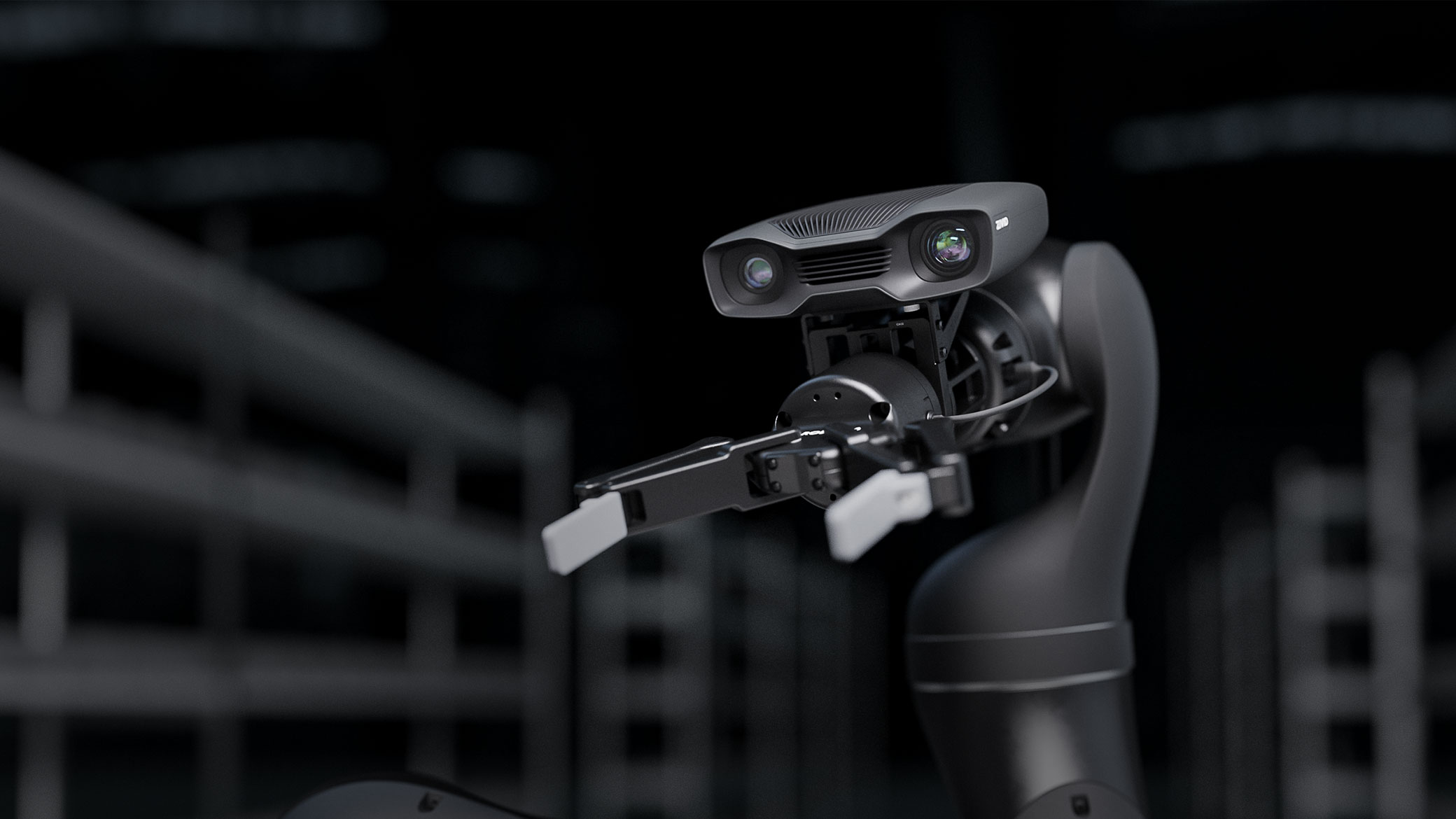
With Zivid SDK 2.17, all Zivid 2+ R-series and Zivid 3 cameras gain a new capability: built-in barcode detection and decoding. This isn’t meant to replace dedicated high-speed barcode scanners. Instead, it adds a powerful, complementary feature to the structured-light 3D + 2D cameras already used for robotic picking and inspection.
The result: one unified sensor that sees shape, color, and identity—ideal for robotic workcells where space, complexity, and cycle time matter.
Here are the robotic applications that benefit most from integrating 2D, 3D and barcode reading in one single camera.
Robotic order picking and induction
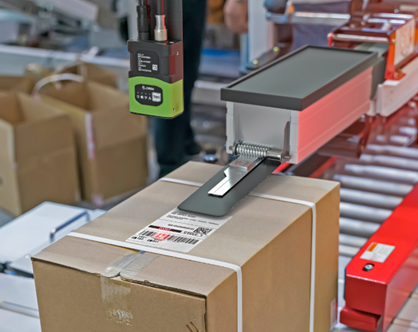
Barcode identification is the backbone of automated order fulfillment. Before a robot is even allowed to move a package, tote, or product, it must first identify exactly what it is handling—and barcodes are the universal, reliable way to do that. They link each item to its SKU, order information, storage location, and destination, ensuring accuracy and preventing costly mis-picks. In fast-moving warehouse operations, robots also rely on 3D vision to segment and pick items from totes, conveyors, or trays.
Why it helps
- Instant ID at the moment of picking
After capturing 3D depth for pick-pose generation, a fast 2D barcode scan immediately identifies the SKU—no extra scanner or item rotation needed.
- Better cycle time
Reduce the 5–10 seconds often spent presenting packages to an external scanner.
- Fewer devices in the cell
Less cabling, fewer mounts, fewer failure points.
Typical use cases
- Mixed-SKU induction
- Goods-to-person order picking
- Automated item registration before packaging
- Populating WMS/ERP with real-time pick IDs
Zivid 3’s long-range, large FOV design makes it ideal for larger warehouse barcodes (30–100 mil), while the Zivid 2+ R-series handles smaller consumer-goods labels (8-15 mil).
Bin-picking and kitting
In manufacturing, parts can be visually similar, differ only in material or small geometry, or belong to different batches. Robots using 3D for segmentation and pose estimation can now also read the part’s barcode in the same capture cycle.
Why it helps
- Error-proof picking
Prevents mixing of near-identical components (connectors, fittings, electronic housings, injection-molded parts).
- Guaranteed traceability
Barcodes carry batch numbers, material IDs, timestamps, and inspection results.
- No additional hardware
Traditional DPM-capable readers take up space. Zivid’s integrated approach keeps the cell compact.
Typical use cases
- Kitting and assembly lines
- Electronics and automotive component sorting
- Mixed-part bin-picking, where each part must be verified before assembly
For these tasks, Zivid 2+ MR60 and MR130 models—with high spatial resolution—are well suited to the smaller data matrix codes often used on individual parts.
Palletizing and depalletizing
In palletizing and depalletizing workflows, 3D is already the primary sensing tool to locate large boxes and compute stable pick poses. Having barcode reading in the same device adds an important layer of intelligence.
Why it helps
- Identify the pallet content without a separate scan
The robot reads the barcode the moment it sees the face of the box.
- Improved decision-making
Barcode data determines which pallet position to place, grouping by order, weight, or priority routing to specific dock doors
- Better reliability in harsh environments
Fewer devices means fewer components affected by temperature variation and vibration.
Typical use cases
- Mixed-SKU depalletizing
- Outbound pallet build verification
- Truck unloading with robot arms
- Automated receiving lines in third-party logistics companies
Zivid 3 XL250’s working distance and wide FOV match the large, 30–100 mil barcode labels common on logistics boxes.
Quality control
Even when the primary task is inspection or measurement—tasks where structured-light 3D excels—knowing which part is in front of the camera is essential for closed-loop traceability.
Why it helps
- Every inspection is linked to a barcode ID
The robot associates dimensional checks or surface analyses directly with the part’s digital identity.
- Supports regulated industries
Automotive, aerospace, and medical device lines often require part-level traceability.
- Simplifies cell design
No need for separate barcode readers in tight inspection stations.
Typical use cases
- Inline dimensional inspection + ID logging
- Batch-level quality control of metal or plastic parts
- Material flow validation in multi-step manufacturing
A unified approach for tough jobs
Zivid’s barcode reader is not aimed at replacing dedicated industrial barcode scanners—those remain indispensable where extremely high-speed, omnidirectional scanning is required.
With SDK 2.17, Zivid cameras now see shape, color, and identity in one integrated device. One camera, 3 capabilities, ideal for demanding robot cells.
For warehouses, factories, and logistics operators already relying on Zivid for robotic picking, barcode reading adds a new dimension to what the robot can understand—without adding more hardware.
Get your hands on a Zivid camera and download our latest SDK:


Why Integrate 2D, 3D, and Barcode Reading in a Single Camera?
Zivid 2+ R-series: 3x Faster and Better Vision for your Robot