.svg "Zivid")




Barcode reading is a critical part of any robotic pick-and-place system—whether in warehousing, logistics, manufacturing, or bin-picking. Modern pick-and-place robot cells typically need three sensing capabilities: 2D imaging, 3D depth, and barcode detection. This blog shows why combining all three in one camera is such a compelling proposition. We then highlight how Zivid 2+ R-series and Zivid 3 now deliver exactly this: a single, integrated sensor that cuts cost, reduces complexity, and accelerates throughput.
Table of contents
- Barcode reading in the industry today
- The benefits of integrating 2D, 3D and barcode reading
- Zivid as a single unified sensor
- Going forward

Robotic pick-and-place is now foundational in both supply chain operations and manufacturing. 3D cameras give robots precise spatial awareness—but that’s only half the story. Robots also need to know what they’re picking and where it goes. That’s where barcodes come in. Barcodes have been the backbone of industrial identification for decades, thanks to their simplicity, cost-effectiveness, and universal standards. They’re still everywhere for a reason: they work.
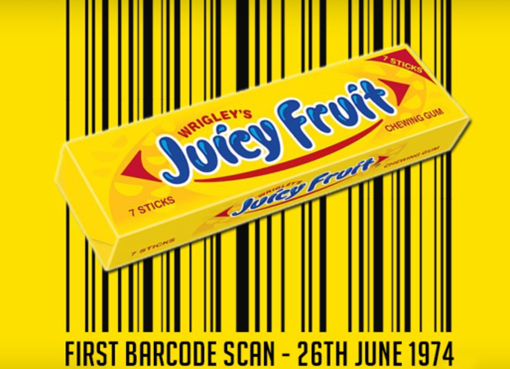 Fun fact: The first commercial barcode scan was a pack of Wrigley’s gum in 1974.
Barcode reading in the industry today
Warehousing
In fast-moving warehouse environments, barcode readers are indispensable. They anchor inventory accuracy, guide robots, and keep WMS/ERP systems in sync.
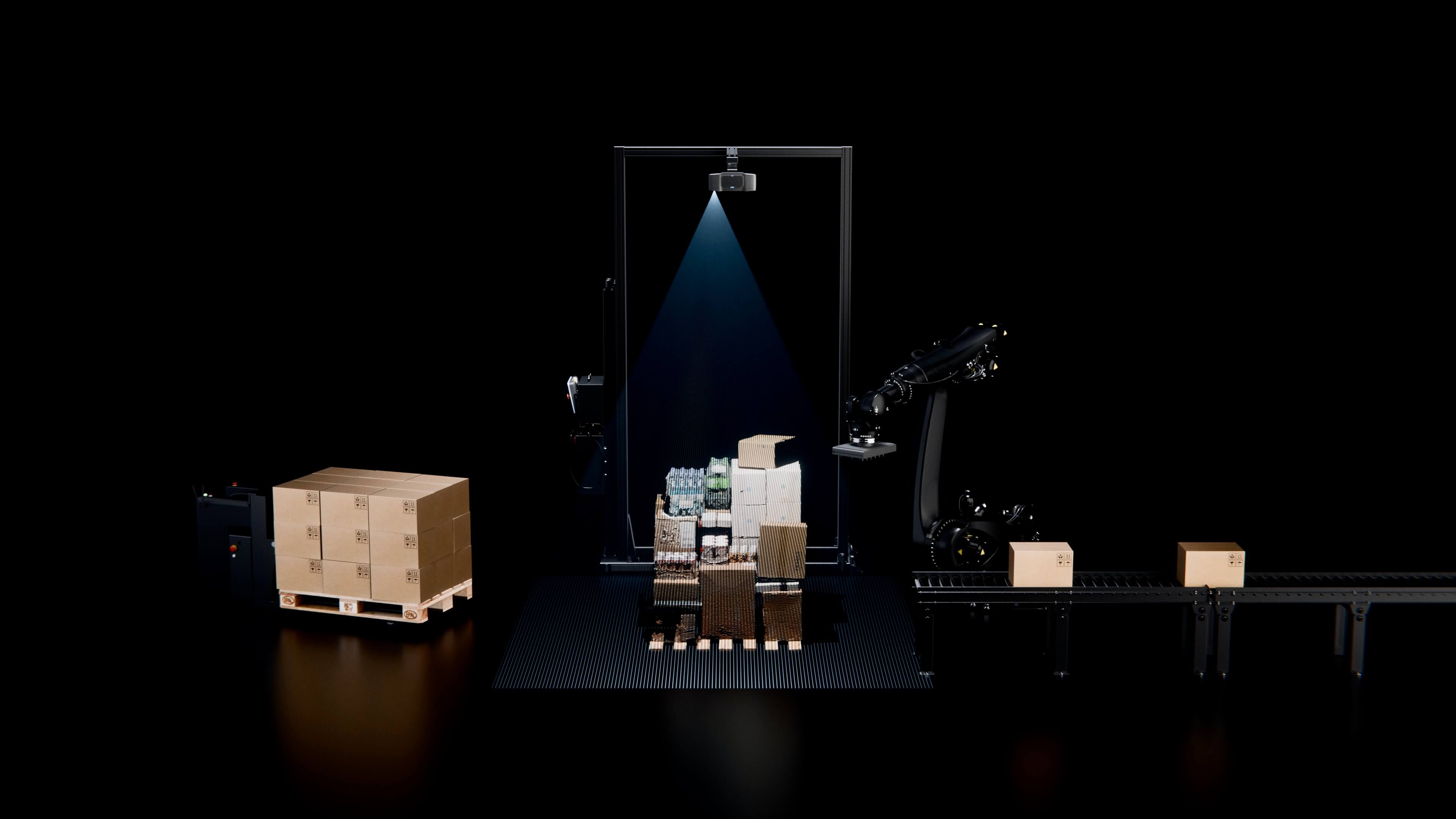
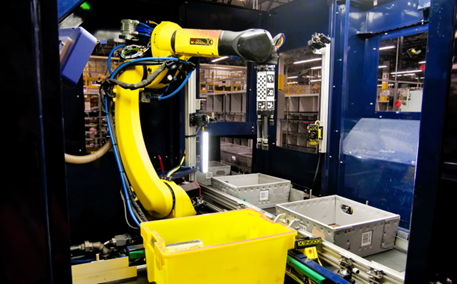 Picking robot with an array of sensors for 3D depth, 2D segmentation, and multiple barcode readers. (Can you find them all?)
Barcode-enabled pick-and-place robots use the code to determine:
- What the item is
- Where it goes
- How it should be handled
This ensures correct order fulfillment, smooth palletizing, and real-time inventory updates.
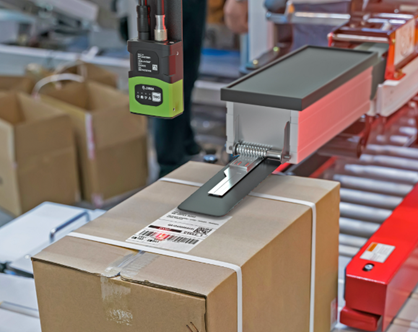 Automated barcode reading is ubiquitous in the warehousing and logistics industries.
Manufacturing
In manufacturing, barcodes are the digital identity of every part. Robots use them to differentiate look-alike components, track batch quality, and prevent assembly errors. They’re essential for:
- Part identification
- Traceability across batches
- Error prevention
- Downstream robotic decision-making
Especially in regulated industries, barcode accuracy equals process reliability.
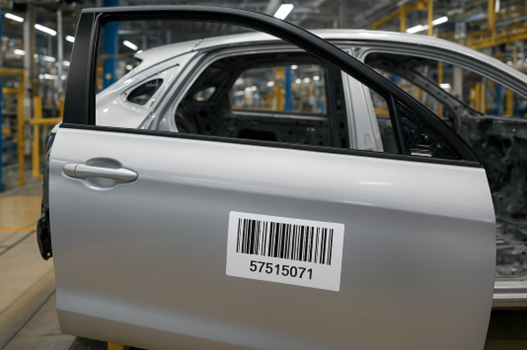 Barcodes are fundamental to process quality control in regulated industries such as automotive.
The benefits of integrating 2D, 3D, and barcode reading
Lower cost, lower complexity
Traditional cells often use:
- A 3D camera
- A 2D camera
- A barcode reader
- Lighting domes
- Mounting, cabling, and fixtures
Each sensor adds cost, engineering effort, mounting constraints, failure points, and space requirements. Robots are already crowded environments—simplification matters.
The right camera reads the right codes
3D cameras are selected based on working distance and item size, and conveniently, barcode sizes scale similarly:
- Gum packets: ~10–12 mil
- Shoe boxes: ~18 mil
- Warehouse boxes: 30–40 mil
- Pallet boxes: 70–100 mil
This means the Zivid model chosen for object size typically has the right spatial resolution to read the barcodes on those objects.
Faster cycle time
When the 3D camera captures depth for pose estimation, it can immediately perform a fast 2D barcode capture.
If the barcode is visible, the robot can:
- Identify the item
- Pick
- Place
This can save 5–10 seconds per cycle—a huge productivity boost.
.png?width=600&height=338&name=image%20(21).png)
Using a Zivid 3D camera can reduce overall cycle time in a picking cell.
Making it work: A quick fit checklist
- Know the smallest code you expect (e.g., 9-mil)
- Check pixels-on-target for your chosen Zivid model
- Use the barcode preset for a separate 2D capture
- Reduce ambient light when possible
- Keep fallback logic for unread cases
Zivid as a single unified sensor
Let’s give a bit more clarity on how we think this feature will be used. You will already have chosen Zivid for your 2D and 3D-related pick-and-place tasks. Of course, as a robot cell systems integrator, there are other system components you will be considering and designing into your application, and one of these will likely be barcode readers. Now we don’t expect you to be choosing Zivid purely for barcode reading, a high-quality 3D camera is significantly more expensive. But what will appeal to you is its ability to reduce one or more barcode readers from your overall system.
The other compelling aspect is that, by integrating the barcode reading into the same camera, you have a more holistic, well-orchestrated ‘ground truth’ for all your sensor data, which is very beneficial in modern systems that are often integrating different data sources for use by AI algorithms.
It also offers the ability to improve robot cycle time. If the barcode is successfully read by the 3D camera, then there is no need to offer the item in front of other barcode scanners to get a read of the barcode. This means that the stage, which can be 5 to 10 seconds, can be bypassed, and the item is immediately placed where it needs to go.
Simplified hardware
A Zivid 2+ R-series camera has only two cables (power + data). No extra scanners, no extra lighting, no extra mounting. Barcode reading is performed via a dedicated 2D capture and does not affect the 3D depth image. Just select the preset and go.
Dedicated barcode presets
Zivid Studio and the Zivid SDK include optimized presets for 1D and 2D barcodes.
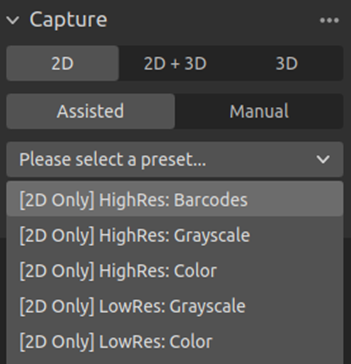 Barcode presets in Zivid Studio.
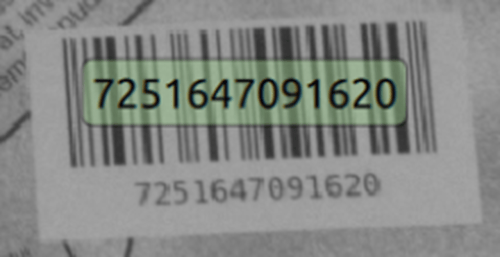
Decoded barcode using Zivid 2+ R series 3D camera.
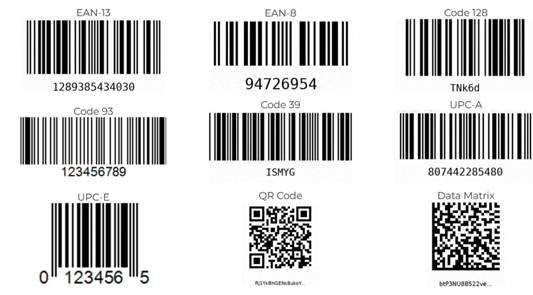
Currently supported barcode and data matrix standards with Zivid 3D cameras.
Support across all cameras
Barcode reading works across the full Zivid 2+ R lineup and Zivid 3, with each model naturally aligning to barcode sizes typical of its working distance.
Getting started and going forward
Barcode detection and reader functionality is available in Zivid Studio and SDK 2.17 onwards. It is free to use for evaluation and development purposes, and a licensing agreement is in place for using this feature in commercial deployments. For further clarification on usage please reach out to Zivid Sales. We have a new tutorial on this topic in the Zivid Knowledge Base, the API can be viewed here.
Adding barcode reading to Zivid 3D cameras continues our push toward highly integrated robotic vision.
It is still advisable to have some dedicated barcode scanners in specific spots—but you can likely use fewer of them, reducing CAPEX while improving throughput. This is just the first version of the feature from us, and more improvements are already underway.
Try out our barcode detection API directly in Zivid Studio with this tutorial:
Robotic Applications Benefiting from A 3D Camera That Also Reads Barcodes
Zivid 2+ R-series: 3x Faster and Better Vision for your Robot