.svg "Zivid")




For automation engineers and system integrators building vision-guided robot cells on automotive production lines.
You've probably seen this before: a body panel arrives at the assembly station, the robot re-scans twice because the specular reflection on the stamped steel is too much for the vision system, and the cell goes into fault before the shift supervisor arrives, and the line keeps stopping.
That kind of failure is why choosing the right 3D camera for automotive body assembly and inspection is one of the more consequential decisions in your cell design. The surfaces are hard, the tolerances are tight, the environments are punishing, and the part variety on a modern vehicle line is relentless.
Automotive is the most robotics-intensive manufacturing sector in the United States, accounting for around 40% of all new industrial robot installations in 2024, with total installations in the car industry up 10.7%, according to the International Federation of Robotics. The pressure to automate is only increasing.
This post is written for automation engineers and system integrators building vision-guided solutions on automotive production lines. It covers what actually matters when selecting a 3D camera for automotive body assembly and inspection, and where Zivid fits in.
Why Automotive Body Work Is Hard for 3D Vision
Before evaluating any specific camera, it helps to understand why automotive applications are consistently among the hardest for 3D vision systems.
The material problem is the most immediate: stamped sheet metal, chrome fittings, painted body panels, and glossy interior components are all highly specular. Most 3D cameras produce saturated, incomplete point clouds on these surfaces, which means missing data exactly where the robot needs it most. Missing point cloud data can make accurate gap and flush measurements impossible without rescanning.
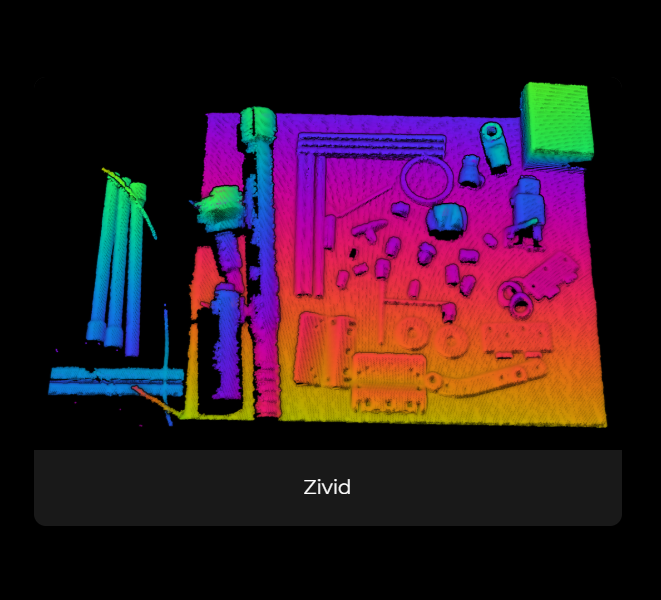
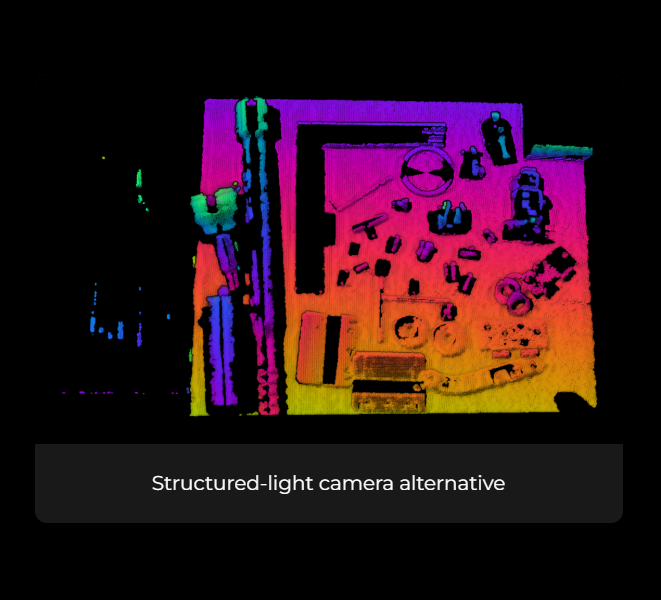
Beyond materials, the environmental demands of a body shop or final assembly area are severe. Welding operations create electromagnetic noise, dust, and heat. Ambient light levels shift throughout the day, especially near loading dock doors. Temperature variation between shifts affects calibration. Cameras that are not designed for continuous industrial operation overheat under production loads, lose accuracy between shifts, and require manual recalibration that interrupts production.
The task variety that appears across a real automotive production line is significant. Across different stations and cells, you may be handling bin picks of shiny fasteners, guiding robots for precision insertion, inspecting painted surface defects, verifying gap and flush on body panels, and checking connector seating after assembly. A 3D camera chosen for one of these tasks that cannot support the others forces a multi-camera architecture, with all the calibration complexity that entails, as automation expands.
What Automotive Assembly Applications Actually Need from a Camera
1. Sub-Millimeter Accuracy That Holds Across Shifts
Assembly tolerances on a body line are not forgiving. Gap and flush measurements between panels are typically specified in tenths of a millimeter. Screw and fastener insertion operations require the robot to know exactly where the part is before committing to the motion. Even slight material deviation between parts can cause the robot to miss the target. Without real-time 3D position feedback, those errors repeat until a human intervenes. Connector insertion and other placement tasks carry the same requirement.
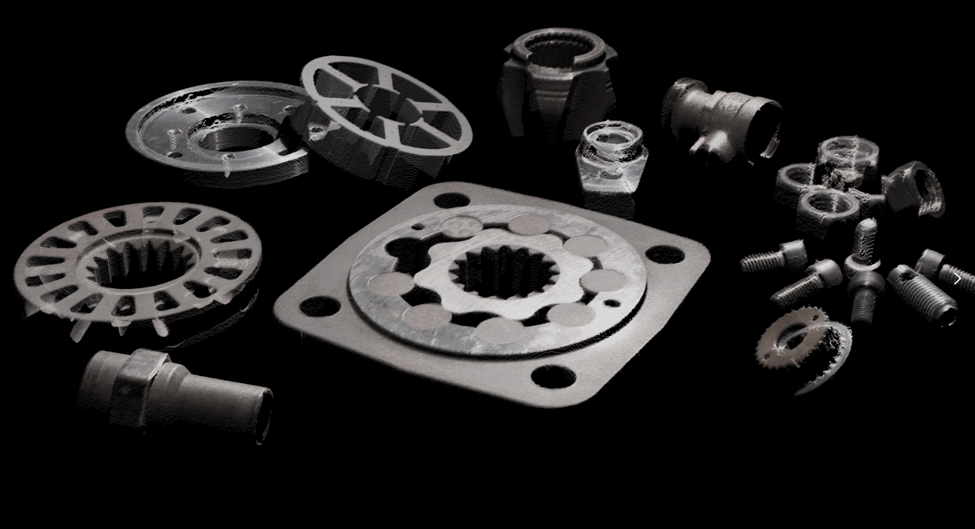 Point cloud of complex assembly parts captured with the Zivid 2+ MR60.
Zivid cameras deliver factory-calibrated dimensional trueness above 99.8%, with stability maintained across temperature variation and continuous operation. The IP65 ingress rating means the optics and electronics are protected from dust and coolant spray, which matters in a body shop where the air is rarely clean.
Calibration drift between shifts is one of the most commonly reported failure modes when automotive teams replace deployed 3D camera systems, alongside overheating under continuous production loads and poor resolution on small parts. A camera that holds calibration under continuous load eliminates an entire category of production variability.
2. Complete Point Clouds on Specular and Reflective Parts
Reflective surfaces are not an edge case in automotive body work. They are the main case. Stamped sheet metal bins, chrome components, painted panels, and partially shiny interior trim all appear in the same cell, sometimes in the same scan. This extends to smaller components too: fasteners, shims, and hardware with varying surface finishes arrive mixed in totes, randomly oriented, with demanding cycle time budgets that leave no room for re-scans.
Zivid cameras handle this through a combination of multi-acquisition HDR capture and proprietary reflection filtering in the Vision Engine. The camera captures multiple exposures, each optimized for different luminance regions in the scene, then merges them into a single point cloud without the saturation artifacts. The result is a complete, accurate point cloud on the kind of surfaces where specular reflections commonly produce holes or noise spikes in 3D point cloud data.
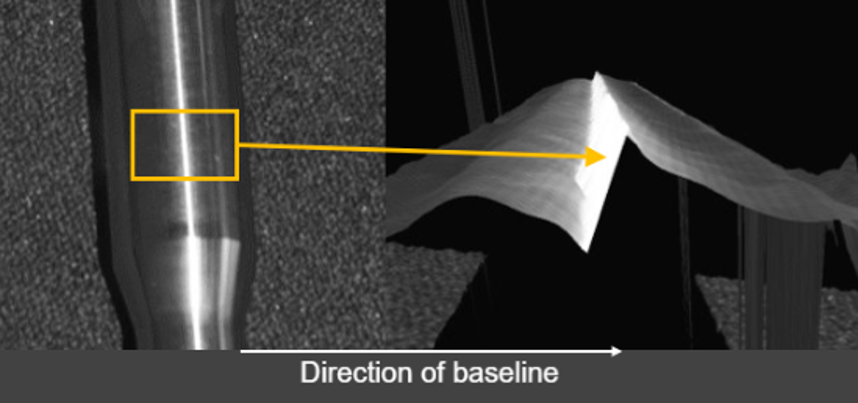 Oversaturated pixels from shiny surfaces can bleed light onto surrounding pixels, corrupting depth data in the surrounding area.
3. Integrated 2D and 3D in a Single Acquisition
Many automotive inspection tasks need both 3D geometry and color information. Gap and flush measurement is primarily geometric. Painted surface defect detection typically benefits from color data alongside 3D topology. Tasks like connector presence verification can use both: color to distinguish connector type, 3D to verify seating depth.
Running a separate 2D camera alongside a 3D camera creates a calibration dependency that automotive integration teams often cite as a source of integration complexity and ongoing maintenance burden. Every 2D-to-3D calibration check is a production interruption. Zivid cameras output a full-resolution 2D color image and a complete 3D point cloud in a single acquisition. No separate 2D camera, no synchronization delays, no additional calibration to maintain.
4. A Camera That Can Mount on the Robot Arm
Fixed-station cameras work well for inspection of parts arriving at a known location, but many automotive assembly tasks require a camera that travels with the robot. Reaching into a body cavity, inspecting weld seams from multiple angles, or verifying connector seating inside a door requires the camera to go where the robot goes.
Zivid cameras are designed to work for a robot-mounting use case, not an afterthought. The compact, lightweight form factor and short baseline allow the camera to be mounted close to the end effector without compromising payload capacity or arm maneuverability. CMES, a Korean automotive automation specialist, built their robot-mounted assembly solution around Zivid's industrial color 3D cameras precisely for this reason. Their AI software paired with Zivid achieved accurate, reliable robot-guided assembly of automotive components with faster cycle time.
Inspection: The Dimension Most Cells Get Wrong
Automated inspection in automotive production often starts as a vision-guided pick-and-place project and then expands. Once the camera is in the cell and the integrator has confidence in the data quality, customers add inspection steps: verifying bolt presence, checking weld seam geometry, measuring gap and flush on assembled body panels. The camera choice made at the start of the project determines what is possible at that expansion stage.
A camera with poor point cloud completeness on shiny surfaces works for a bin pick of matte parts but fails when the customer asks to add a specular surface inspection step six months later. A camera without integrated color fails when the customer wants to add painted surface defect detection.
The inspection applications that matter most in automotive production, and that automotive teams across assembly, component manufacturing, and automotive suppliers consistently need to automate, include:
-
Gap and offset measurement on body panels to sub-millimeter accuracy
-
Painted surface defect detection, including defects invisible to the naked eye
-
In-line quality checks across numerous part variants on a shared production line
-
Battery pack and EV component inspection, where tolerance requirements are as tight as anywhere on the line
-
Connector and fastener presence verification after assembly
A camera evaluated only against today's picking application is a camera that may block tomorrow's inspection expansion. Choosing hardware that handles specular surfaces, delivers integrated 2D and 3D, and maintains calibration under continuous operation keeps both doors open.
What Actually Fails in Production
The failure modes automotive teams report when they replace an existing 3D camera system are consistent across projects: overheating under 24-hour production loads, accuracy drift between shifts due to temperature variation, and incomplete point clouds on reflective or mixed-surface parts that produce miss-picks and inspection errors over time.
These are not software problems. They are industrial design problems. A camera that is not built for continuous industrial operation will fail under the conditions of a real automotive production environment, regardless of how its performance looks in a lab evaluation.
The pattern is recognizable: the system performs well in commissioning, degrades gradually under production load, and eventually requires manual recalibration or camera replacement. The root causes such as thermal management, calibration architecture, and reflection handling are fixed at the hardware design level. They cannot be patched.
Zivid cameras are IP65 rated, with active thermal management and calibration stability tested under continuous industrial operation. The Pickit application, automated removal of dust spots in automotive surface finishing, required robot-mounted 3D cameras with the highest levels of accuracy and industrial reliability to deliver consistent results across an active production line. That kind of reliability is a function of industrial-grade design, not just sensor specification.
Finding the Right Camera for Your Cell
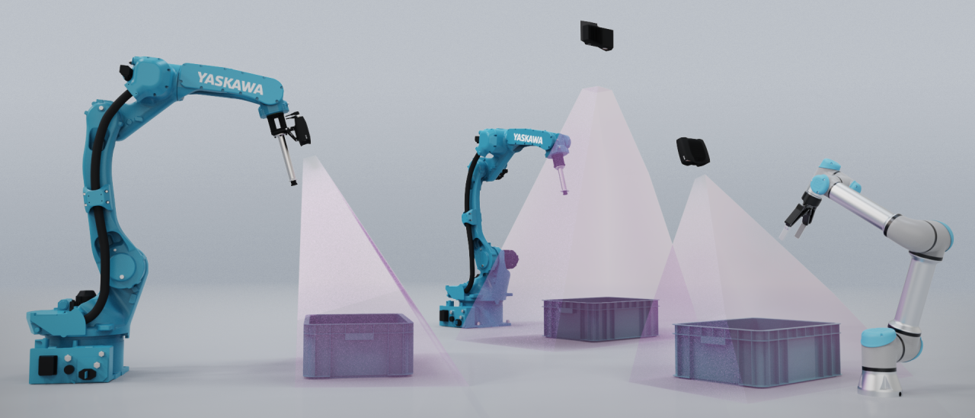
The answer to "what is the best 3D camera for automotive body assembly and inspection" depends on your specific geometry: the working distance your installation requires, the field of view that covers your largest part, whether the camera is fixed or arm-mounted, and the surface materials involved.
What does not change across these variables is the requirement for accurate, complete point clouds on specular and painted surfaces, calibration stability under continuous industrial operation, integrated 2D plus 3D output in a single acquisition. That combination makes selecting a 3D camera for demanding automotive body applications a far more consequential decision than it might first appear.
If you want to evaluate Zivid cameras against your specific automotive body assembly or inspection application, the best starting point is a point cloud comparison against your actual parts. That is where the difference between a camera that handles specular surfaces and one that does not becomes immediately visible.
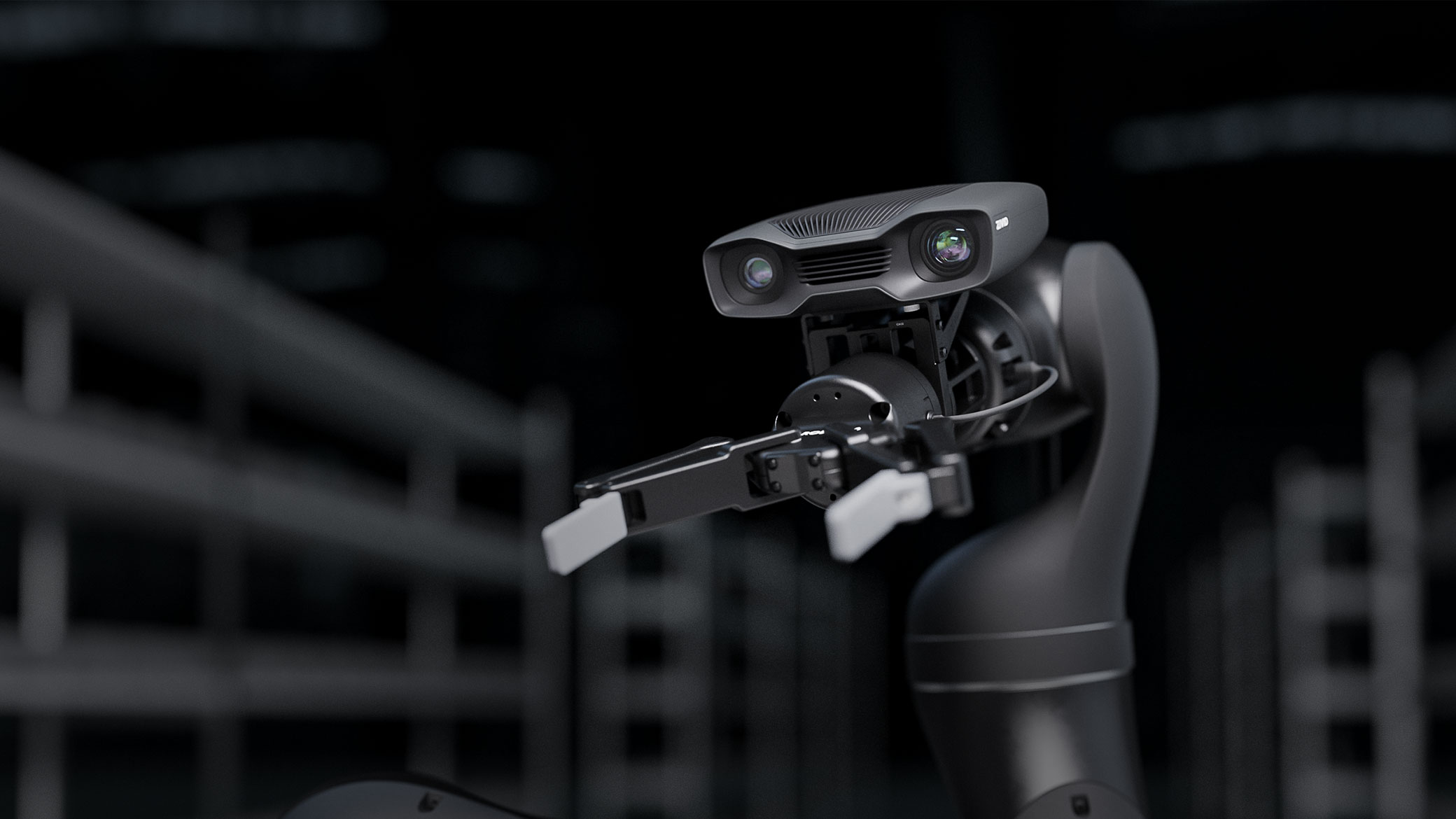
The Advantages of 3D Sensors in Robotic Machine Tending
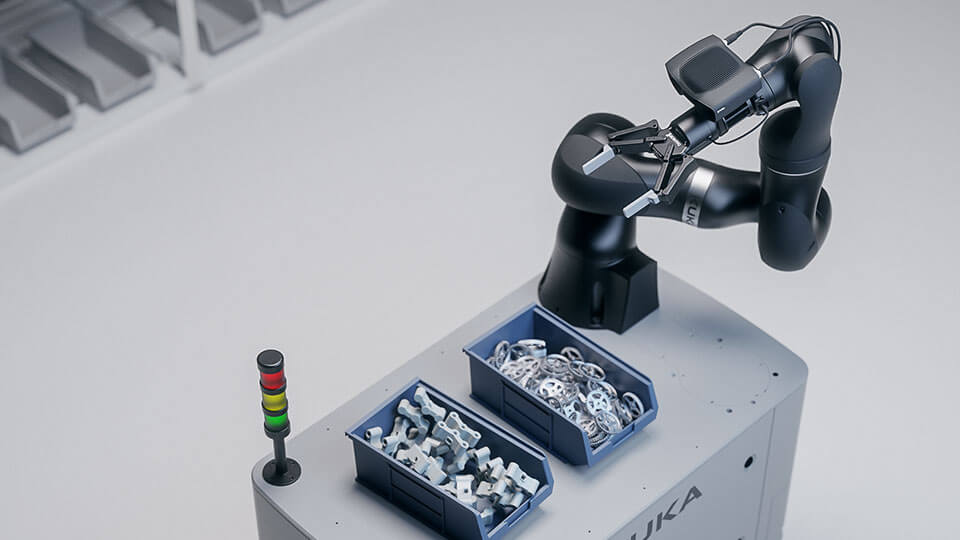
Solving the Top 3 Bin-Picking Challenges with Machine Vision